


25 January 2016
From the sectionMiddle East
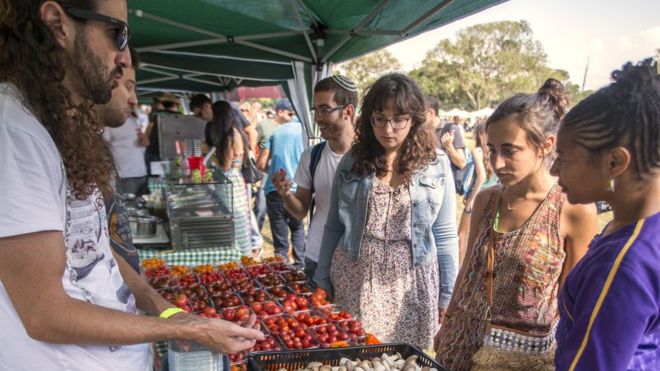 Image copyrightAFP Israel has the highest number of vegans per capita in the world, activists say
On a typical evening at Nanuchka, a popular Georgian restaurant in the middle of Israel’s bustling Tel Aviv, music fills the air and alcohol flows freely.
Until a few years ago, Nanuchka was just a conventional Georgian pub serving traditional food like khachapuri, a cheesy bread, and khinkali, a meat-stuffed dumpling.
But then Nana Shrier, the flamboyant owner of the venue, where the walls are adorned with erotic art, became a strict vegan – in what is said to be the most vegan country in the world per capita.
She decided to convert her entire restaurant to a meatless and dairy-free establishment despite being advised against it by friends and business colleagues.
Israelis are flocking to it – and business is more successful than ever.
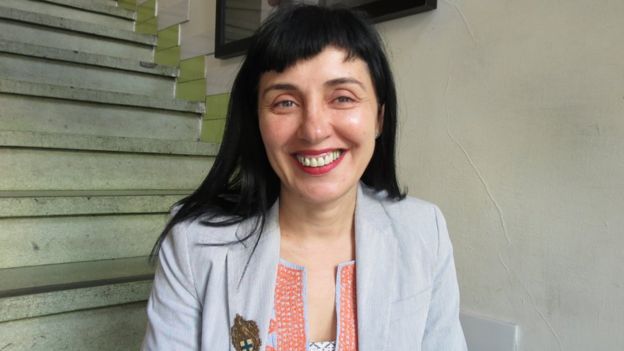 Image copyrightErica Chernofsky Image captionNana Shrier has seen business grow since converting her restaurant to vegan cuisine
For vegans, everything derived from animals is off-limits. Similar to – but stricter than – vegetarians, vegans do not eat eggs and cheese, or drink milk, and in some cases even avoid honey. Leather, wool and silk are also avoided.
Sitting at Nanuchka, eating a meal of vegan tsatsivi (where cauliflower is substituted for chicken), Nana says that consuming animals is both inhumane and unhealthy.
«I don’t like it,» she explains, scrunching her nose in disgust. «I feel the body of the animals in the steak, I feel the animal in the fillet, and the blood. I don’t like it so much.»
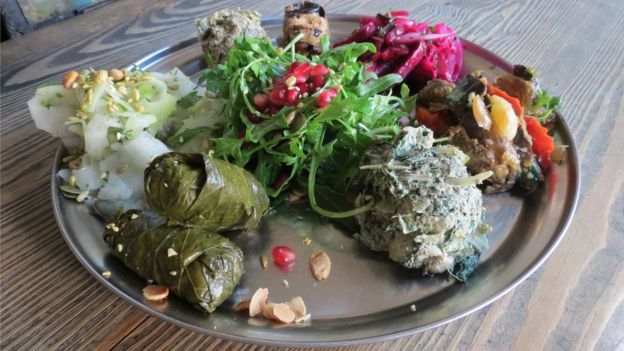 Image copyrightErica Chernofsky Image captionA plate of vegan appetisers on the menu at Nana Shrier’s restaurant
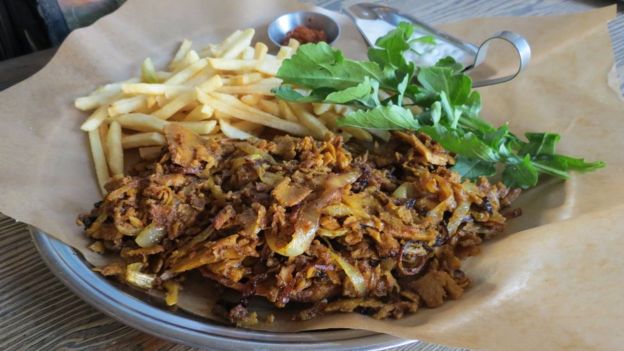 Image copyrightErica Chernofsky Image captionThe restaurant also serves a vegan version of the meat dish shawarma
Nana argues there is another benefit to veganism as well.
She says that sometimes, after eating a large steak, or a cheeseburger, for example, people can feel tired and lethargic.
«When you eat vegan food, you have a lot of energy to do very good and nice things,» she says with a coy smile.
When asked if she is implying that vegans have a better sex life than their meat-eating counterparts, she laughs heartily and says, «of course!»
Vegan soldiers
Veganism has become so prominent in Israel that the Israel Defense Forces (IDF) has started catering to followers in its ranks by offering vegan-friendly ration packs, non-leather boots and wool-less berets.
From an army base in southern Israel, Cpl Daniella Yoeli says the food is not exactly worth writing home about but she is happy to have the option of eating couscous and lentils over schnitzel and schwarma.
 Image copyrightErica Chernofksy Image captionThe IDF meets the needs of vegan soldiers like Cpl Daniella Yoeli
She has always loved animals, she explains, and became a vegetarian as a child, converting to veganism only recently.
Her diet is so important to her that had the army not been able to provide conditions that had harmed no living creatures, she might not have enlisted in a combat unit where she would not have been able to provide her own food.
While a vegan combat soldier might seem contradictory, Yoeli politely disagrees.
«In Israel, in the army, what we do in our service is defend the citizens, so I don’t think it’s a paradox, » she says, M-16 rifle slung over her shoulder.
«Like I want to defend animals, I want to defend people, so this is why I’m in combat and this is why I’m in the army.»
‘Species revolution’
According to Omri Paz, the head of the Israeli organisation Vegan Friendly, 5% of Israelis are vegan and the number is growing. Israel boasts some 400 vegan-friendly restaurants, including the world’s first vegan Domino’s Pizza.
 Image copyrightErica Chernofsky Image captionOmri Paz: It’s time to think about civil rights for animals
Mr Paz attributes the rise of veganism here to a YouTube video by US animal rights activist Gary Yourofsky, which garnered millions of hits worldwide, and more than a million in Israel alone, a lot for a country of only some eight million people.
Mr Yourofsky lectures about the cruelty of the meat industry and, controversially, compares the treatment of animals to the Nazi Holocaust.
Omri Paz says he watched the video and did not leave his room for a week. He says this is the civil rights issue of our century.
«Just like 300 years ago, blacks weren’t equal to whites and that changed with time, and then 100 years ago with the women’s revolution, so I think now, the 21st Century, is the animal species revolution,» he says.
«Treating them not as humans, but not as slaves.»





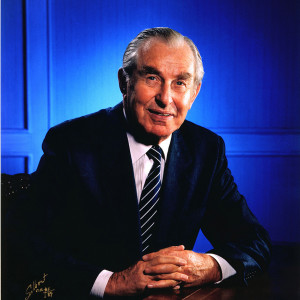 En 1975, fue embajador de Israel en la Organización de las Naciones Unidas (ONU).